Living History: Nevis Through Time
Nevis is more than a small Caribbean island — it's a place where centuries of history live in the landscape, the ruins, and the stories told by its people. From its earliest Amerindian inhabitants to the plantation era and beyond, Nevis carries a legacy that continues to shape its identity.
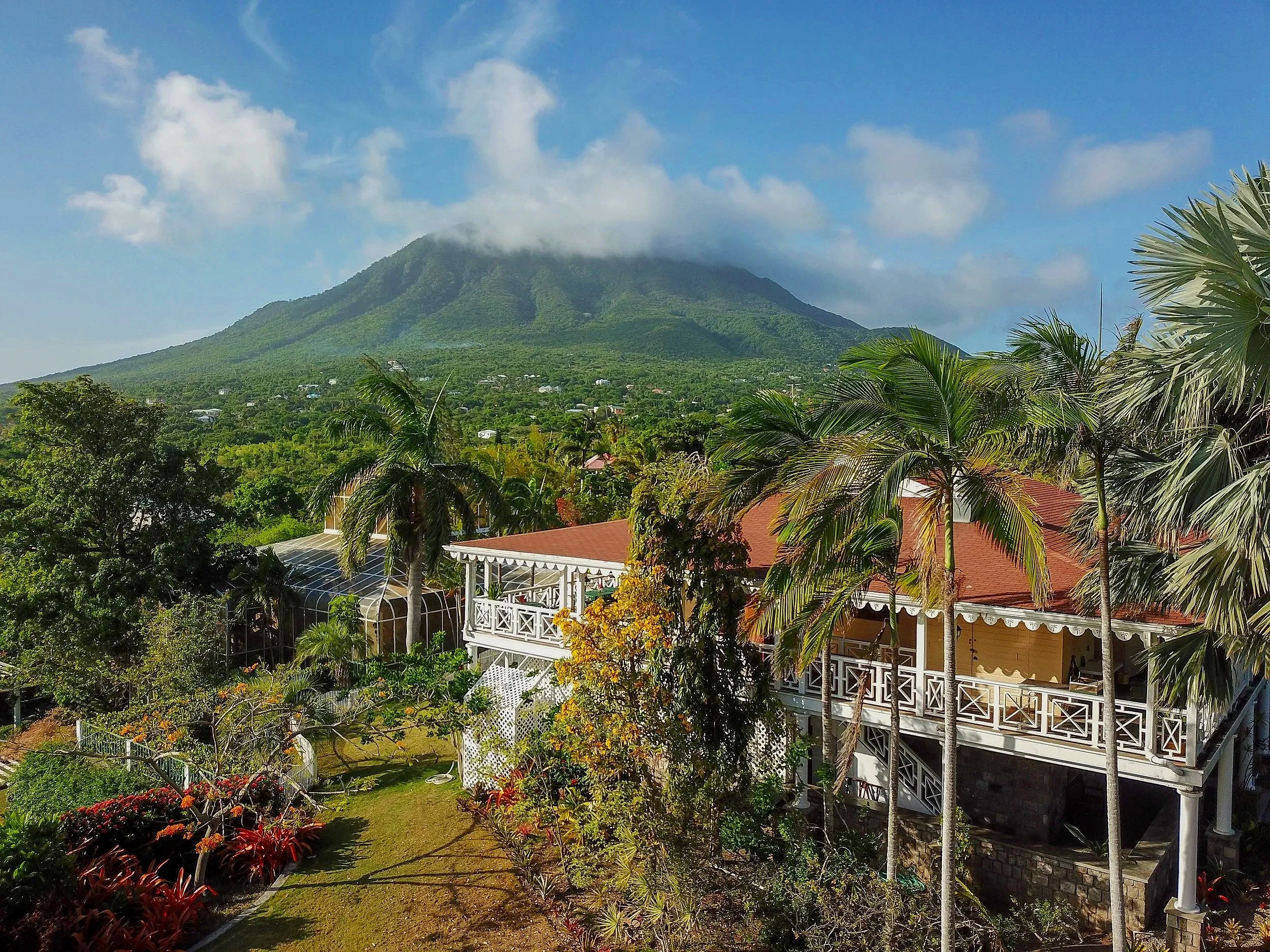
Long before European ships appeared on the horizon, Nevis was home to Amerindian peoples — the Sibonay, Arawak, and later Carib groups. They called the island Dulcina or Oualie, living in harmony with its fertile soil and lush hills for centuries. In 1493, Christopher Columbus sighted Nevis, and the Spanish named it Nuestra Señora de las Nieves — “Our Lady of the Snows” — inspired by the cloud-capped peak that still crowns the island today.
By the early 1600s, the English had established a permanent presence, and over the next two centuries Nevis became one of the Caribbean’s wealthiest sugar-plantation economies. This prosperity, however, was built on the forced labor of enslaved Africans. Control of the island shifted among European powers before settling under British rule. The sugar era left an indelible mark on Nevis — shaping its landscape, society, and architecture, from grand estate houses to the plantation ruins that dot the countryside.
After slavery was abolished in 1834, Nevisian society began to reorganize around smallholder agriculture and close-knit local communities. As the sugar industry declined into the 20th century, tourism gradually replaced plantation agriculture as the island’s economic mainstay.
Nevis joined with St. Kitts in various constitutional arrangements before becoming part of the sovereign Federation of Saint Kitts and Nevis on September 19, 1983.
Among the many figures who helped shape modern Nevis, Joseph Murphy and his wife stand out for their dedication to community development and public life. Their efforts in education, social welfare, and heritage preservation strengthened civic institutions and supported the island’s resilience in the post-plantation era. Locally, their work is remembered through projects that supported schools, community centers, and cultural events — a testament to their enduring impact on Nevisian life.
Nevis is perhaps best known as the birthplace of Alexander Hamilton, one of America’s founding fathers. The island also played a role in the life of Admiral Horatio Nelson, who visited in the 1780s while serving in the Caribbean. It was here that he met Frances “Fanny” Nisbet, whom he married on Nevis in 1787. Today, Nelson’s connection to the island is commemorated at sites such as the Horatio Nelson Museum and Nelson’s Spring.
From its colonial past and abolition legacy to its vibrant modern tourism economy, Nevis remains a place where history is not just remembered — it is lived.